



NOP Receptor/ORL1
NOP receptor/ORL1 is the most recently identified opioid receptor family member and responds to nociceptin/orphanin FQ as its endogenous agonist[1][2]. Mechanistically, N/OFQ activates an opioidlike G protein-coupled receptor and inhibits adenylate cyclase in ORL1-expressing cells, linking NOP receptor signaling to cellular transduction and nociceptive regulation[2][3]. In pain-related models, OFQ/N shows overlapping distribution in pain-processing areas with opioids but produces diverse nociceptive responses, including hyperalgesia after intracerebroventricular administration in mice[3][4]. Compared with MOP, KOP, and DOP opioid receptors, NOP/ORL1 is homologous to classical opioid receptors but remains insensitive to traditional opioids, supporting its distinction as a separate opioid receptor isoform[4]. Structural studies of human NOP bound to peptide-mimetic antagonist C-24 provide atomic-level information useful for ligand design[5]. For experimental applications, J-113397 functions as a potent and selective nonpeptidyl ORL1 antagonist, while Ro 64-6198 is a systemically active nonpeptide NOP agonist with high brain penetration and strong selectivity over classic opioid receptors[6][7].
References:
- [1]. Toll L, et al. Nociceptin/Orphanin FQ Receptor Structure, Signaling, Ligands, Functions, and Interactions with Opioid Systems. Pharmacol Rev. 2016 Apr;68(2):419-57. [Content Brief]
- [2]. Reinscheid RK, et al. Orphanin FQ: a neuropeptide that activates an opioidlike G protein-coupled receptor. Science. 1995 Nov 3;270(5237):792-4. [Content Brief]
- [3]. Meunier JC, et al. Isolation and structure of the endogenous agonist of opioid receptor-like ORL1 receptor. Nature. 1995 Oct 12;377(6549):532-5. [Content Brief]
- [4]. Chiou LC. Pharmacological characterization of the nociceptin receptor, et al. J Biomed Sci. 2000;7:232-240.
- [5]. Thompson AA, et al. Structure of the nociceptin/orphanin FQ receptor in complex with a peptide mimetic. Nature. 2012 May 16;485(7398):395-9. [Content Brief]
- [6]. Kawamoto H, et al. Discovery of the first potent and selective small molecule opioid receptor-like (ORL1) antagonist: 1-[(3R,4R)-1-cyclooctylmethyl-3- hydroxymethyl-4-piperidyl]-3-ethyl-1, 3-dihydro-2H-benzimidazol-2-one (J-113397). J Med Chem. 1999 Dec 16;42(25):5061-3. [Content Brief]
- [7]. Shoblock JR. The pharmacology of Ro 64-6198, et al. The pharmacology of Ro 64-6198, a systemically active, nonpeptide NOP receptor (opiate receptor-like 1, ORL-1) agonist with diverse preclinical therapeutic activity. CNS Drug Rev. 2007 Spring;13(1):107-36. [Content Brief]
-
NOP Receptor/ORL1 Related Products (28)
Related Products (28)

- 1
- 2
-
JTC-801
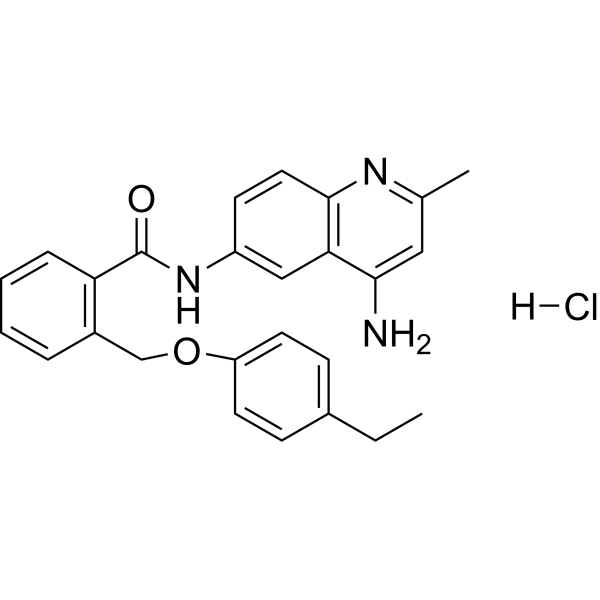 0 ImagesJTC-801 is a selective opioid receptor-like1 (ORL1) receptor antagonist, binding to ORL1 receptor with a Ki value of 8.2 nM.
-
SB-612111 hydrochloride
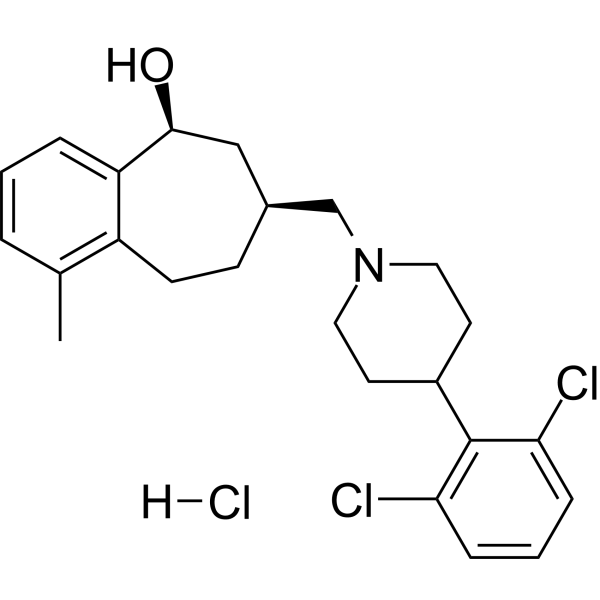 0 ImagesCat. No.: HY-18618APurity: 99.64%SB-612111 hydrochloride hydrochloride is a novel and potent opiate receptor-like orphan receptor (ORL-1) antagonist with a high affinity for hORL-1 (Ki=0.33 nM). SB-612111 hydrochloride exhibits selectivity for μ-,?κ- and?δ-receptors with Ki values of?57.6 nM, 160.5 nM and 2109 nM, respecticely. SB-612111 hydrochloride effectively antagonizes the pronociceptive action of Nociceptin (HY-P0183) in an acute pain model.
-
LY2940094
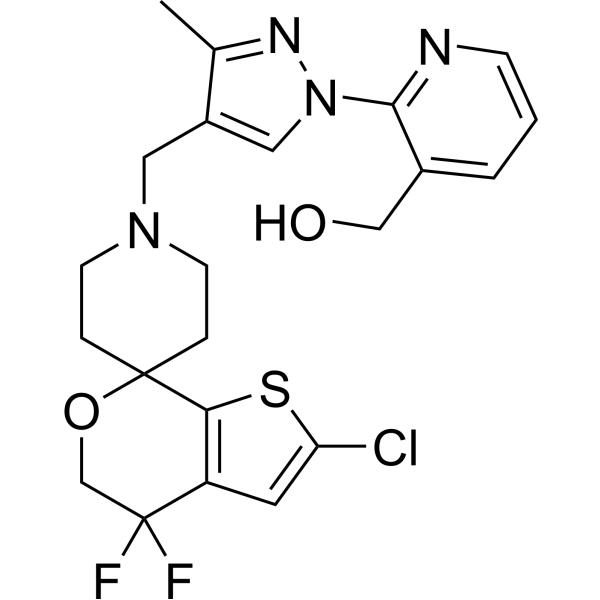 0 ImagesSynonyms: BTRX-246040LY2940094 (BTRX-246040) is a potent, selective and orally available nociceptin receptor (NOP receptor) antagonist with high affinity (Ki=0.105 nM) and antagonist potency (Kb=0.166 nM). LY2940094 reduces ethanol self-administration in animal models.
-
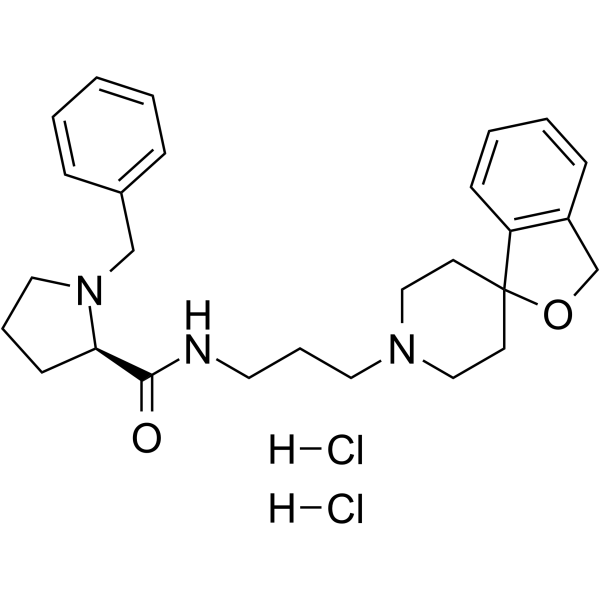
MCOPPB trihydrochloride
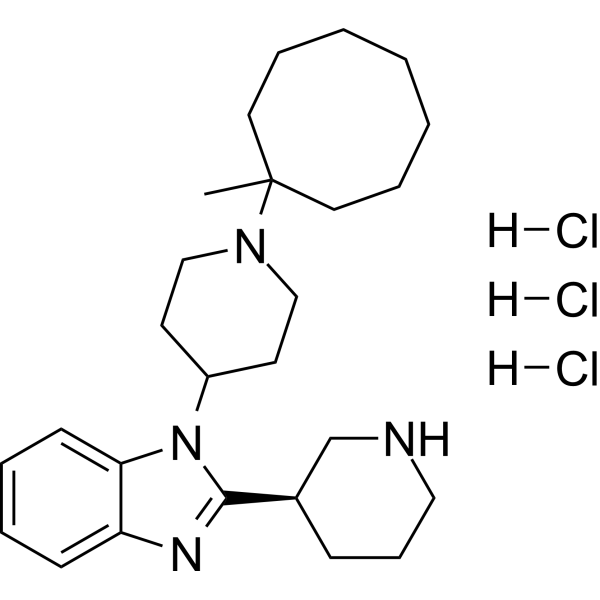 0 ImagesMCOPPB trihydrochloride is a NOP/ORL1 G protein-coupled receptor agonist and autophagy inhibitor that can cross the blood-brain barrier. MCOPPB trihydrochloride clears senescent cells, regulates locomotion, lipid storage and immune responses, and inhibits fibrosis and angiogenesis. MCOPPB trihydrochloride blocks autophagic flux, induces changes in locomotion and lipid storage, and activates the stress-responsive immune transcription network, thereby improving post-infarction cardiac function and exerting anxiolytic effects. MCOPPB trihydrochloride can be applied to research fields such as aging-related diseases and ischemic heart failure.
-
BPR1M492
 0 ImagesCat. No.: HY-184490CAS No.: 3118558-91-8BPR1M492 is a brain-penetrant μ-opioid receptor (MOR) agonist an in vitro EC50 of 0.93 nM in the cAMP inhibition assay and 0.004 nM in the FLIPR Ca2+ assay without a clear signaling bias between cAMP and β-arrestin-2 pathway. BPR1M492 is a cAMP-biased nociceptin-orphanin FQ opioid peptide agonist. BPR1M492 is a weak cAMP-biased δ/κ-opioid receptor agonist. BPR1M492 demonstrates potent in vivo antinociception and can be used for pain research.
-
(±)-J-113397
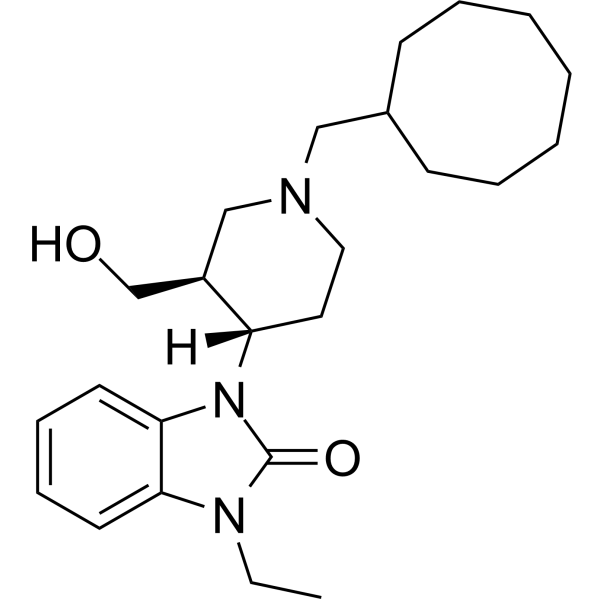 0 Images(±)-J-113397 is a potent and selective non-peptidyl ORL1 receptor antagonist with a Ki of 1.8 nM for cloned human ORL1. J-113397 inhibited nociceptin/orphanin FQ-stimulated GTPγS binding to CHO cells expressing ORL1 with an IC50 value of 5.3 nM. J-113397 can be used for researching the physiological roles of nociceptin/orphanin FQ.
-
J-113397
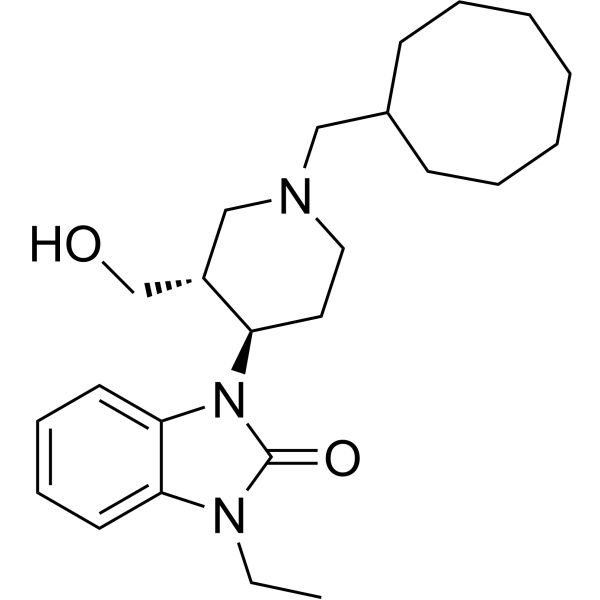 0 ImagesJ-113397 is the first potent and selective nonpeptidyl ORL1 receptor antagonist (Ki: cloned human ORL1=1.8 nM) without any agonistic effects on other opioid receptors.
-
Ro 64-6198
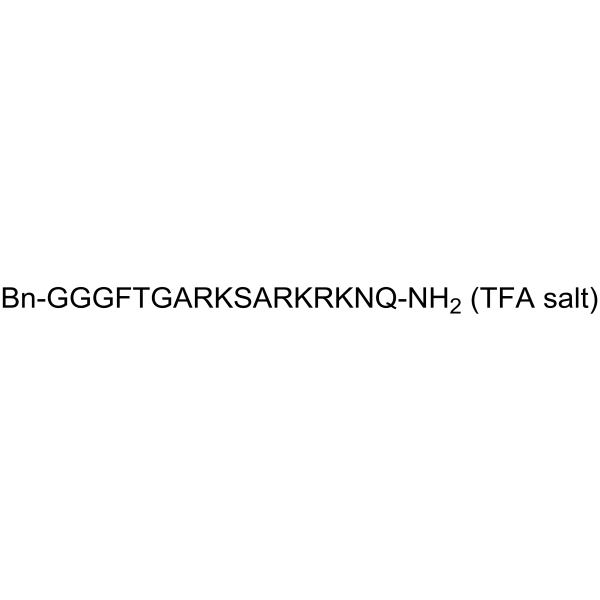
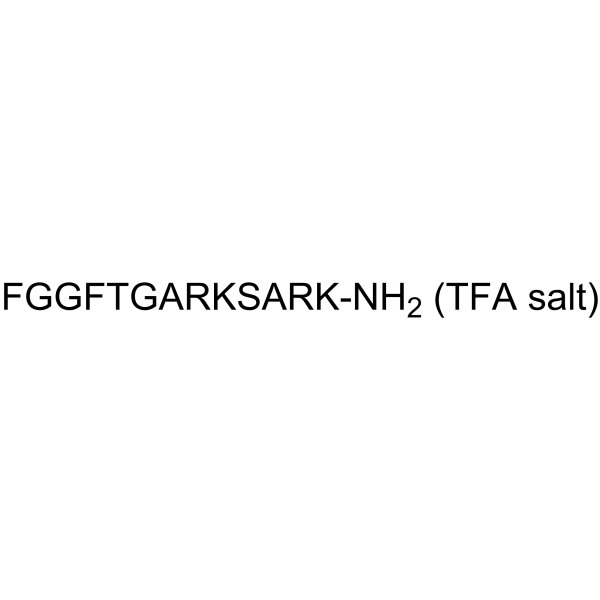
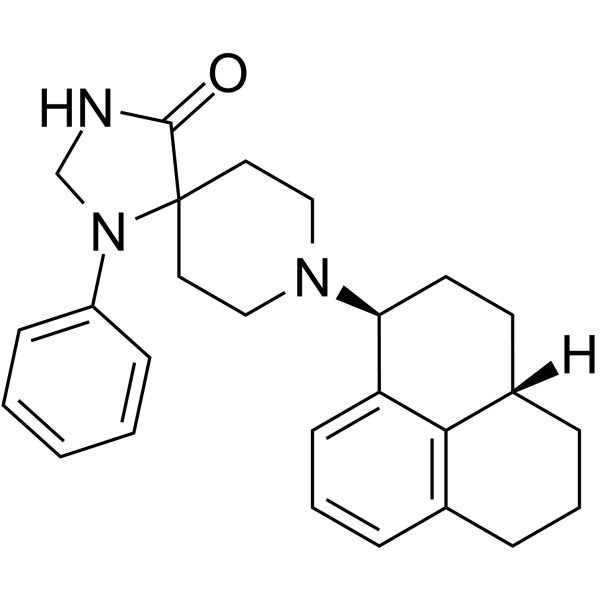 0 ImagesRo 64-6198 is a potent, selective, nonpeptide, high-affinity, high cellular permeability and brain penetration N/OFQ receptor (NOP) agonist with an EC50 value of 25.6 nM. Ro 64-6198 is at least 100 times more selective for the NOP receptor over the classic opioid receptors. Ro 64-6198 can be used for stress and anxiety, addiction, neuropathic pain, cough, and anorexia.
-
MT-7716 hydrochloride
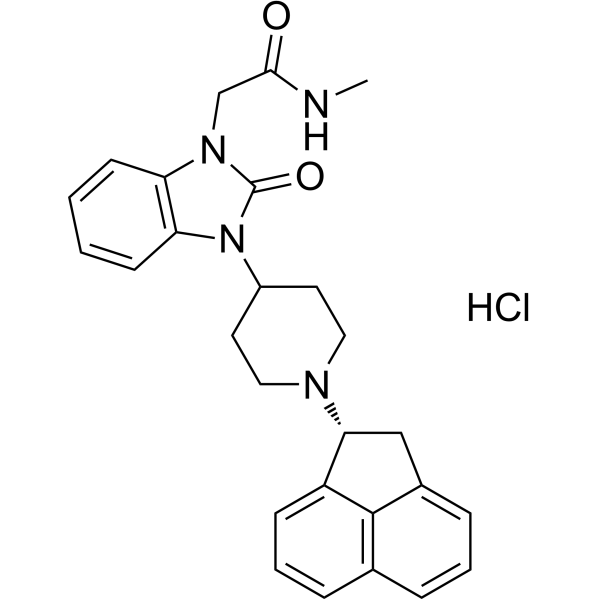 0 ImagesSynonyms: W-212393 hydrochlorideMT-7716 hydrochloride (W-212393 hydrochloride) is a selective non-peptide nociceptin receptor (NOP) agonist and promising potential treatment drug for alcohol abuse and relapse prevention.
-
AT-076
 0 ImagesCat. No.: HY-106732CAS No.: 1657028-64-2AT-076 is an opioid pan antagonist at nociception, kappa, mu, and delta opioid receptors, with Ki values of 1.75 nM (NOP), 1.67 nM (MOP), 1.14 nM (KOP) and 19.6 nM (DOP), respectively.
-
Lexanopadol
 0 ImagesCat. No.: HY-120385CAS No.: 1357348-09-4Synonyms: GRT-6006Lexanopadol (GRT-6006) is a μ-opioid receptor and nociceptor receptor (ORL-1 receptor) agonist. Lexanopadol can be used to study pain.
-
MK-5757
 0 ImagesCat. No.: HY-14124CAS No.: 919482-44-3MK-5757 is a Nociceptin/Orphanin FQ Peptide Receptor antagonist. ORL1 antagonist 3 can improve cerebral blood flow disorders and ischemic damage, and alleviate abnormal neurological symptoms. ORL1 antagonist 3can be used for the research of neurological disease, such as traumatic brain injury.
-
Nociceptin (1-13), amide
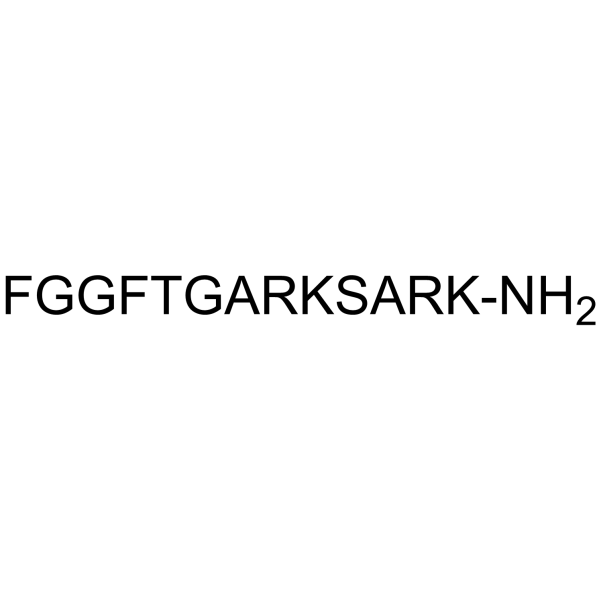 0 ImagesCat. No.: HY-P1317CAS No.: 178064-02-3Nociceptin (1-13),amide is a potent ORL1 receptor (opioid receptor-like 1 receptor,OP4) agonist with a pEC50 of 7.9 for mouse vas deferens and a Ki of 0.75 nM for binding to rat forebrain membranes.
-
SB-612111
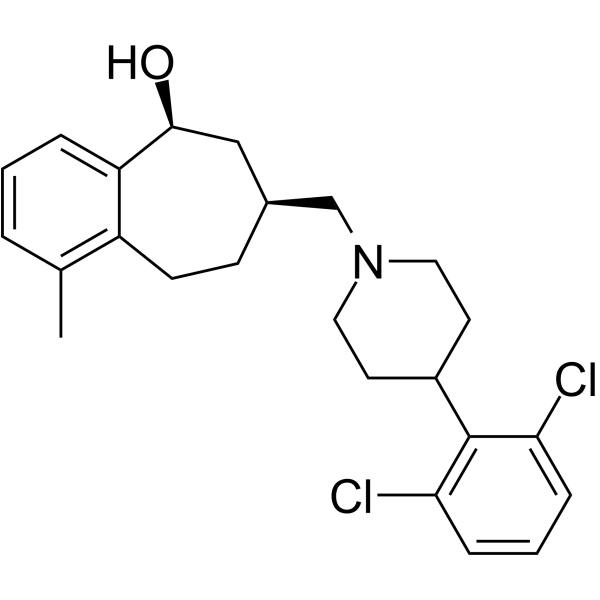 0 ImagesCat. No.: HY-18618CAS No.: 371980-98-2SB-612111 is a novel and potent opiate receptor-like orphan receptor (ORL-1) antagonist with a high affinity for hORL-1 (Ki=0.33 nM). SB-612111 exhibits selectivity for μ-, κ- and δ-receptors with Ki values of 57.6 nM, 160.5 nM and 2109 nM, respecticely. SB-612111 effectively antagonizes the pronociceptive action of Nociceptin (HY-P0183) in an acute pain model.
![[(pF)Phe4]Nociceptin(1-13)NH2 TFA](https://file.medchemexpress.com/product_pic/hy-p1300a.gif "Click to View [(pF)Phe4]Nociceptin(1-13)NH2 TFA Product Detail")
-
NOP antagonist 1
 0 ImagesCat. No.: HY-176505CAS No.: 1283095-64-6NOP antagonist 1 (Compound (-)-31) is a nociceptin opioid peptide (NOP) antagonist with a Kb of 8.65 nM. NOP antagonist 1 can be used for neuropsychiatric disorders research.
-
MT-7716 free base
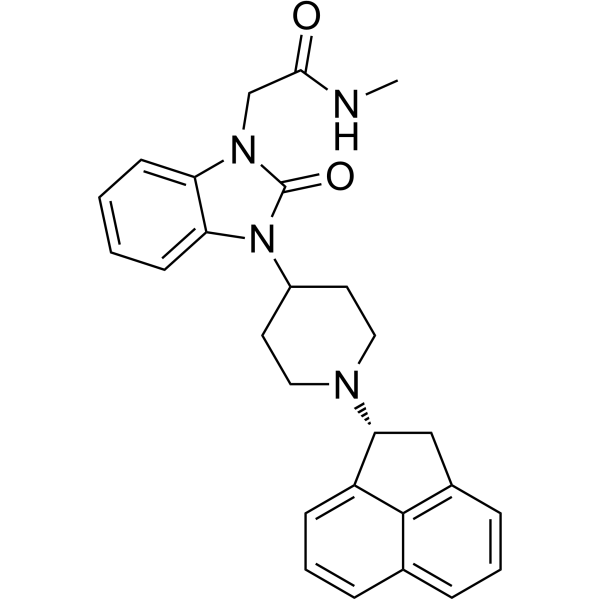 0 ImagesCat. No.: HY-107094ACAS No.: 610323-32-5Synonyms: W-212393MT-7716 free base (W-212393) is a selective non-peptide nociceptin receptor (NOP) agonist and promising potential treatment drug for alcohol abuse and relapse prevention.
- 1
- 2



